
A school can have security officers.
CCTV.
Written procedures.
Access-control systems.
And still have serious security gaps.
This leads to a more important question than:
“How many security officers do we have?”
The better question is:
“Do we know that our security system actually works when it matters?”
That is where School Security Operations begins.
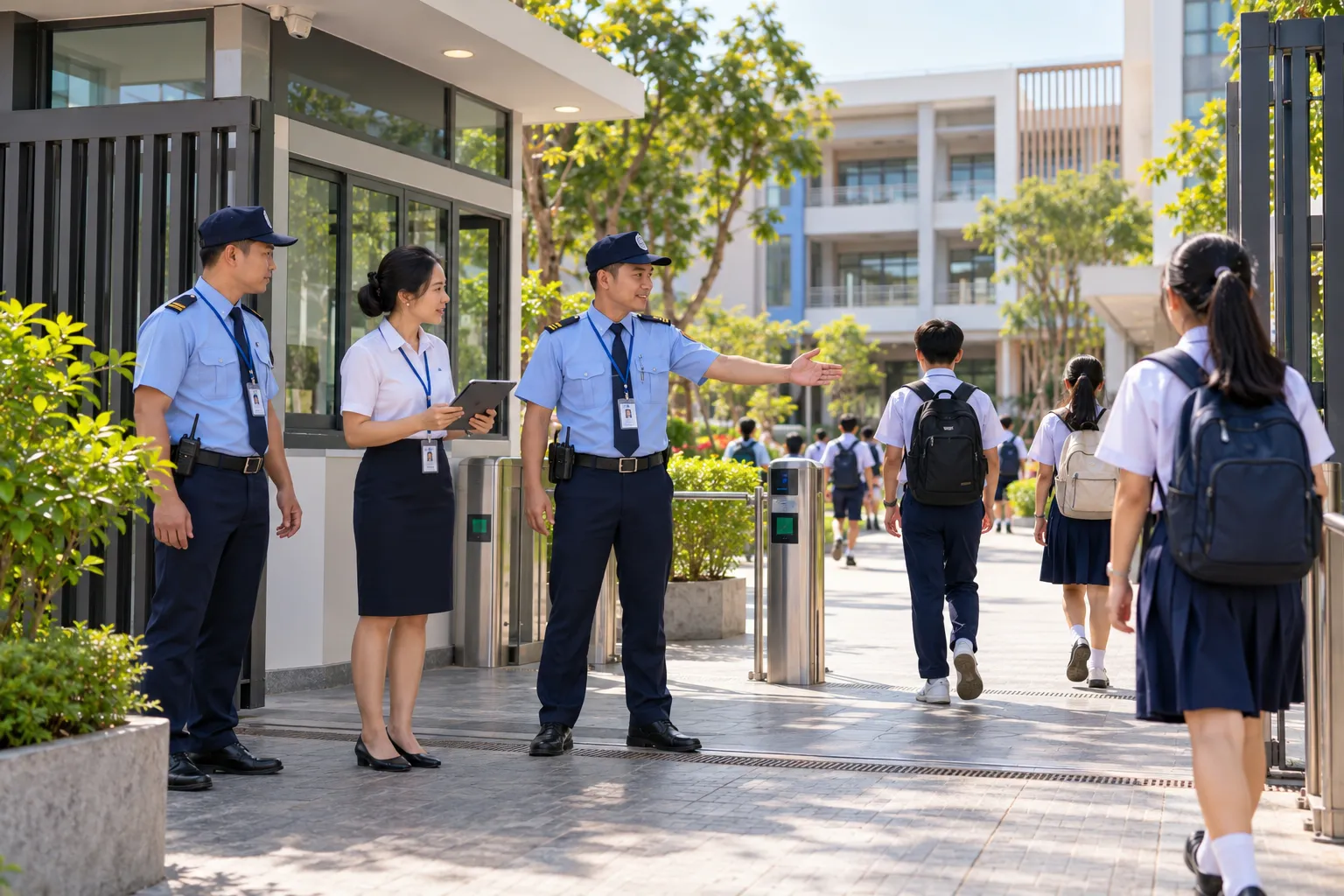
School security is not only a staffing problem
When people think about school security, the most visible measures usually come to mind:
- security officers;
- gates and perimeter controls;
- CCTV;
- access cards;
- radios;
- visitor registers;
- written procedures.
Each can play an important role.
Their presence, however, does not by itself demonstrate that security is working effectively.
A procedure creates value only when people understand it and execute it consistently.
A camera creates value only when it is connected to an appropriate monitoring and response process.
A visitor register matters only when the people who should register actually pass through that process.
And a security officer can perform effectively only when responsibilities, authority, escalation and expected actions are clear.
School leaders therefore need to move beyond asking:
“What security measures do we have?”
and ask:
“How do we know those measures actually work?”
What is School Security Operations?
School Security Operations is the system through which security requirements are translated into daily actions that can be executed, supervised, verified and improved.
A useful way to think about that system is:
RISK → STANDARD → EXECUTION → CONTROL → EVIDENCE → IMPROVEMENT
Risk
Before deciding how many officers, cameras or checkpoints are needed, a school should understand what it is trying to control.
Examples may include:
- a student leaving without proper authorization;
- unauthorized access to the campus;
- inconsistent management of parents, visitors or contractors;
- gaps during arrival and dismissal;
- student conflict in common areas;
- incidents that are not identified or escalated in time.
Every school has a different physical environment, student population and operating model.
Security Operations should therefore begin with the school's actual risks rather than a standard equipment list.
Standard
Once the risk is understood, the next question is:
What does correct execution look like?
If a student asks to leave campus during the school day, what should the security officer do?
If a parent requests access beyond the normal visitor area, who authorizes it?
If conflict occurs in a sports area, who responds first and when should the matter be escalated to school staff?
When a school bus completes its route, what final check is required and who confirms it?
A useful standard needs to be clear enough to guide people in real situations.
A procedure that exists in a manual but does not translate into consistent behavior is not yet an effective operational control.
Execution
This is where the system meets reality.
Security operations take place when entrances are busiest, parents are waiting, students are moving, contractors need access and several events compete for an officer's attention at the same time.
The gap between what the procedure says and what actually happens is where many operational risks emerge.
Security performance therefore cannot be assessed simply by confirming that an SOP exists.
Schools need to understand how that SOP performs under real operating conditions.
Control
Even well-trained people can make mistakes.
A reliable system should therefore not depend on every individual performing perfectly at all times.
Controls should help the organization:
- identify deviations;
- support frontline officers when a situation exceeds their authority;
- establish accountability;
- escalate at the right time;
- verify critical activities;
- address recurring weaknesses.
That is the difference between having someone on duty and having a system that controls how the duty is performed.
Evidence
A useful management question is:
“How do we know this was actually done?”
Not every activity needs additional paperwork.
But critical controls need an appropriate form of evidence that allows execution to be verified.
Depending on the control, evidence may include logs, checklists, handover records, incident records, supervisory checks or other operational data.
The objective is not bureaucracy.
It is to move from:
“We believe the system is working”
to:
“We can see how the system is working.”
Improvement
When something goes wrong, the question should not end with:
“Who made the mistake?”
Another question matters just as much:
“How did the system allow this to happen?”
Perhaps the standard was unclear.
Perhaps training was insufficient.
Perhaps responsibilities overlapped.
Perhaps a control looked appropriate on paper but did not work in the real environment.
Or perhaps the same warning had appeared before without being translated into a system change.
A mature Security Operations system should be able to learn from deviations and improve through each operating cycle.
Three simple questions can reveal significant operational gaps
A school does not always need to begin with a complex audit.
For any critical security activity, leaders can start with three questions:
What is supposed to happen?
That is the Standard.
What actually happens?
That is Execution.
How do we know?
That is Evidence.
When the three answers do not align, an operational gap may exist.
Imagine, for example, that the school's procedure requires controlled access, but a secondary gate is routinely opened during peak periods without an equivalent verification process.
The issue may not simply be an inattentive security officer.
The control itself may not fit the realities of the operating environment.
Correcting the individual without correcting the system can allow the same problem to return.
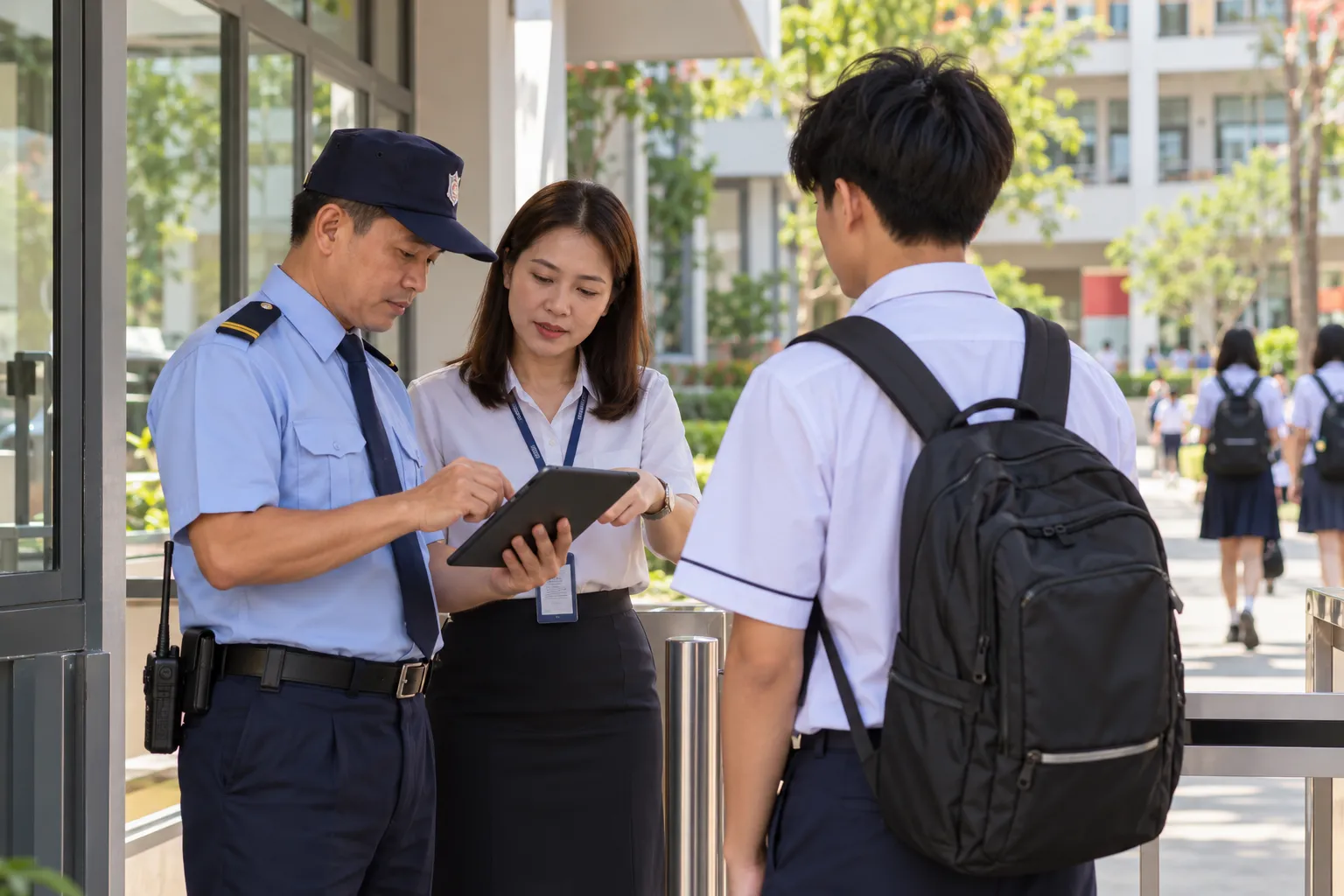
Where should schools apply a Security Operations mindset?
Student exit control
Do not stop at asking whether an officer is positioned at the gate.
Ask:
- who is authorized to approve a student leaving;
- how the officer verifies that authorization;
- how exceptions are handled;
- who receives an escalation when information is unclear;
- what appropriate evidence confirms that the control was followed.
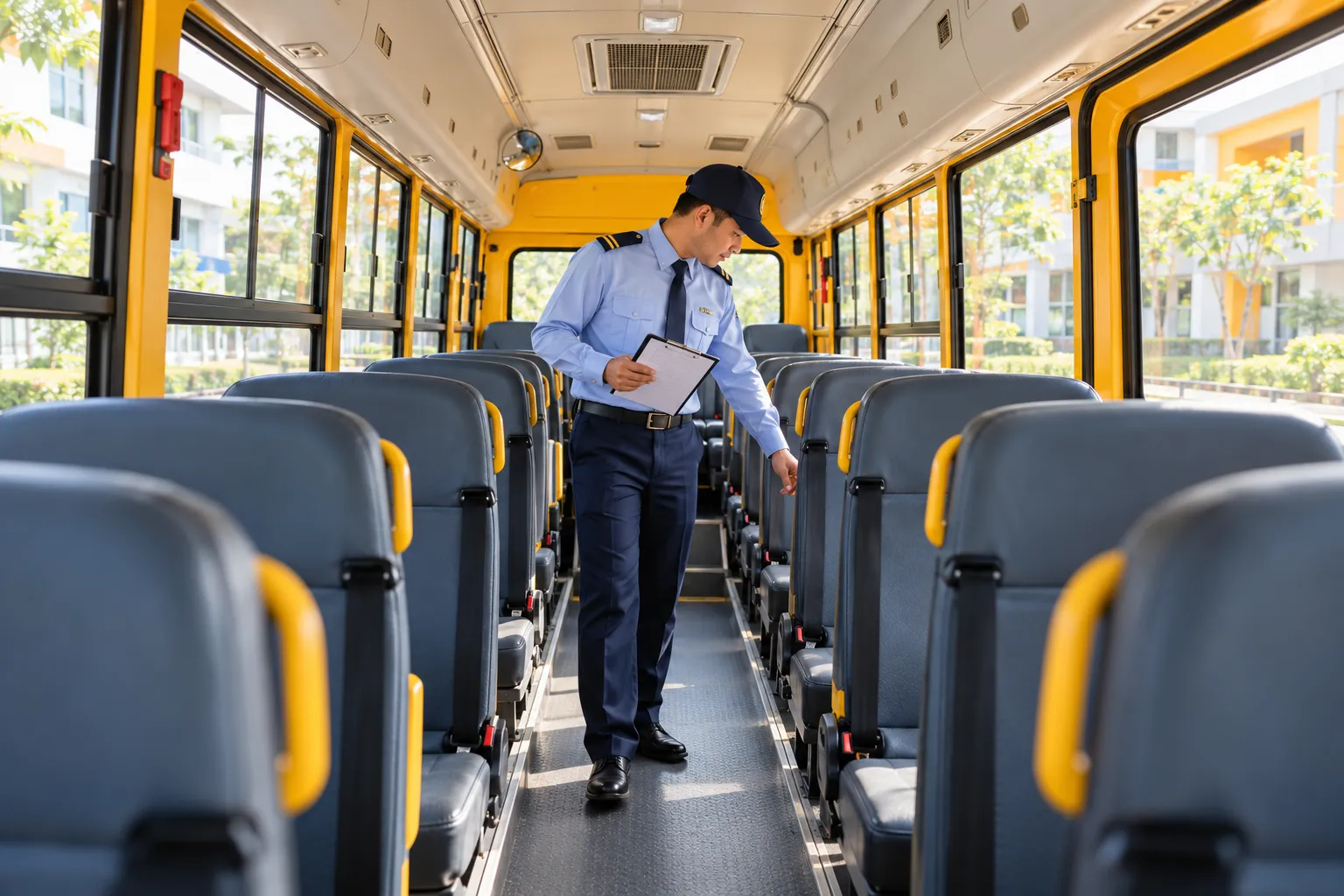
Arrival, dismissal and school transport
A journey is not necessarily complete simply because a vehicle has returned.
Handover points, final checks and accountability need to be clearly understood by the people involved.
Parents, visitors and contractors
Schools need to remain accessible to their communities.
Accessibility, however, does not mean that people should move through the campus without a clear purpose, authorization and area of access.
Playgrounds, sports areas and common spaces
The question is not merely whether security officers patrol these areas.
Schools should establish what situations require intervention, where the security role ends and when responsibility must transfer to designated school personnel.
Incidents and unusual situations
Security officers need to know more than that they should respond.
They need to understand:
how to respond → whom to inform → what to record → what the organization should learn afterwards.
Can CCTV and technology solve the problem?
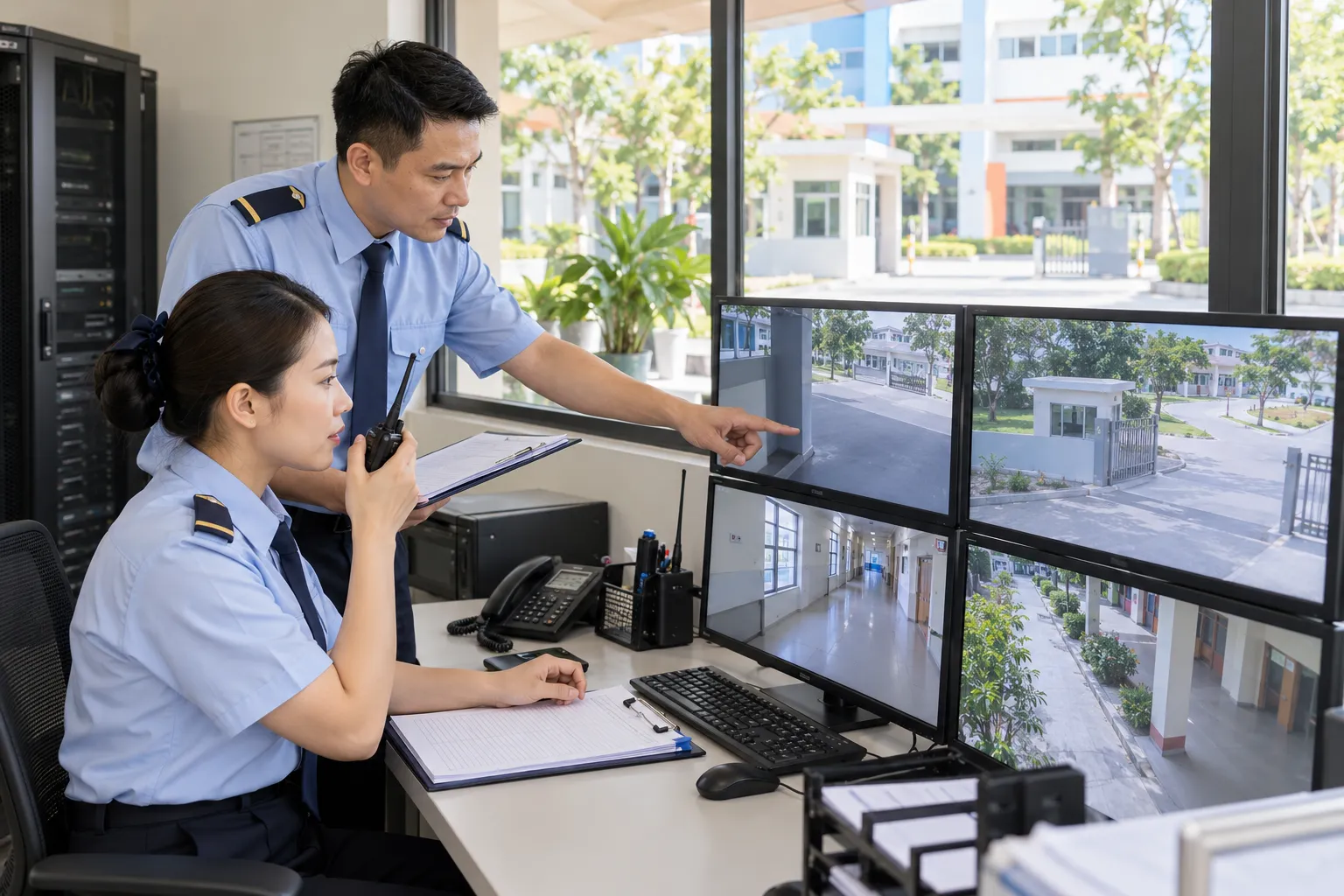
Technology can be an important part of school security.
But technology does not replace operations.
A camera can record an event.
An access-control system can restrict a door.
A visitor-management system can record visitor information.
People and procedures are still required to determine:
- who monitors;
- what requires a response;
- who has decision authority;
- when escalation is necessary;
- how an incident is recorded and reviewed.
International school-security guidance follows a similarly integrated approach. CISA's K-12 guidance treats personnel, policies and procedures, technology, site design, and training as interdependent elements of a physical security system. Current UK Department for Education guidance likewise emphasizes security policy, defined responsibility, risk management and access control rather than relying on a single security measure.
When should a school review its Security Operations?
A serious incident should not be the only trigger.
Leadership may have reason to look deeper when:
- the same small failure keeps returning;
- written procedures are implemented differently across shifts;
- important decisions depend heavily on individual experience;
- management receives reports but cannot readily verify execution quality;
- responsibilities between security and school operations are unclear;
- incidents result in reminders to staff but not changes to the control;
- additional people or technology have been introduced but operational confidence remains low.
None of these observations automatically means that a school's security system is poor.
They are reasons to ask better questions.
From security provider to Security Operations Partner
A security partner should not begin and end with:
“How many officers do you need?”
A more valuable question is:
“What security outcomes does the school need, and what operating system is required to deliver those outcomes reliably?”
That requires connecting people with:
standards → training → execution → supervision → evidence → review → improvement.
Responsibilities must also remain clear.
Security Operations does not replace the school's responsibilities for education, safeguarding, student management or its legal and governance obligations.
The role of a Security Operations Partner is to help ensure that security controls within its agreed scope are translated into reliable execution in the real operating environment.
That is also how Samurai Group approaches its role.
Not simply as people positioned at security posts.
But as a partner working toward security operations that are standardized, controlled, evidenced and continuously improved.
A question for school leadership
If you had to answer tomorrow:
“How do we know our school's security system is actually working?”
What would you rely on?
Headcount?
CCTV?
SOPs?
A service-provider report?
Or evidence that critical controls are being executed correctly every day?
That is the difference between having security measures and operating a reliable security system.
The next step is not necessarily to buy more
Start by understanding what you already have.
Five questions can provide a useful starting point:
- What are the school's most important security risks?
- What controls currently address each risk?
- Are execution standards clear?
- What evidence shows that those controls actually work?
- What changes when a deviation is identified?
These questions form the foundation for a School Security Operations Health Check: diagnosis before deciding whether the answer is more people, different procedures, better technology or stronger operational governance.
Do not start with the solution. Start by understanding the operational gap.